
Farmhouse Pantry | Pantry and Scullery Dreaming
A farmhouse pantry seems like the ultimate homesteading status symbol doesn’t it? A walk-in pantry with a prep area and sink would be a dream! Let’s look at some of the best farmhouse pantry inspiration from around the web!
This post contains affiliate links

Last year we took the first step toward our dream of adding on to our home, we had plans drawn up. Then of course lumber prices skyrocketed and the economy overall felt very unstable. We knew that any sort of building project was not in our immediate future. However, it felt really satisfying to come up with a plan, to have something tangible to look at to validate our dream.
We recently had a contractor come and look at our plans and he will be giving us an estimate on the cost to build. We are probably still a year or more out on the actual groundbreaking, so I am going to use the time in between to really solidify our plans. I know there will be a million decisions to make when the time comes so I am going to try to think everything through and plan exactly what we want to get out of each space.
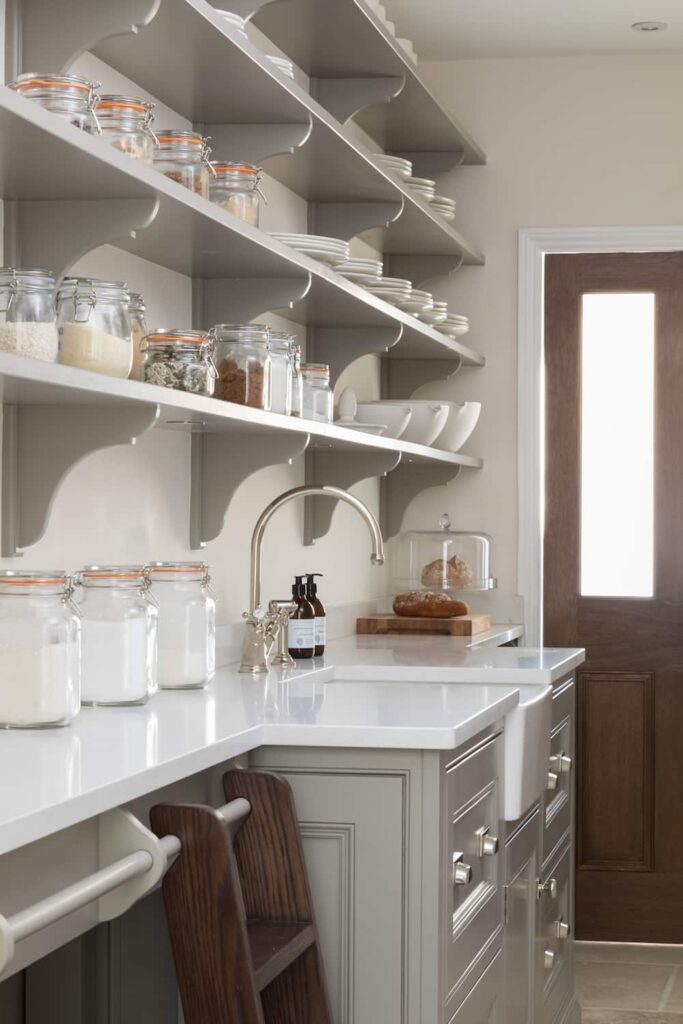
Kitchen Scullery Layout
Our current home is around 2700 square feet. This is really a nice-sized home and for the most part, we don’t feel terribly crowded even with 12 people living here.
However, there are a few problems with our home. For one, the upstairs bedrooms are all converted attic space, therefore there are two tiny closets to service all of our children. The other issue is that the walls are about 20″ tall as the ceiling’s slope is nearly to the floor. This makes it difficult to place furniture and dressers are nearly impossible in most rooms.
The opening to the tiny half bath upstairs is under 6′ tall! Our two oldest boys are over 6′ so that causes a lot of head-knocking. They are both living in an apartment for the school year, however, they do come home on days off and we want to still be able to accommodate them!
Other Issues
The other main issue is our dining room. We have a 9′ table that just fits our family, there is absolutely no room for anything else. So, when we have guests for dinner it is quite cramped. Thinking about the future, we know we want to be able to accommodate spouses and grandchildren! Our current situation does not accommodate that.
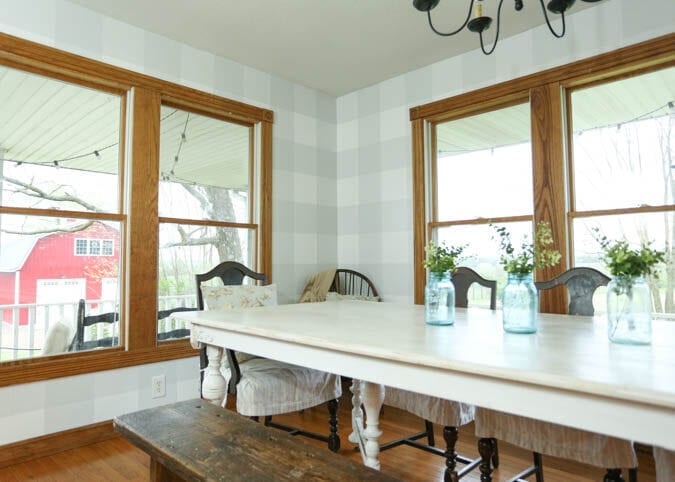
Our mudroom/laundry room is also inadequate, you can see how we have made it work here. However, it is still a difficult area that is constantly overloaded.
Square Footage of the plans
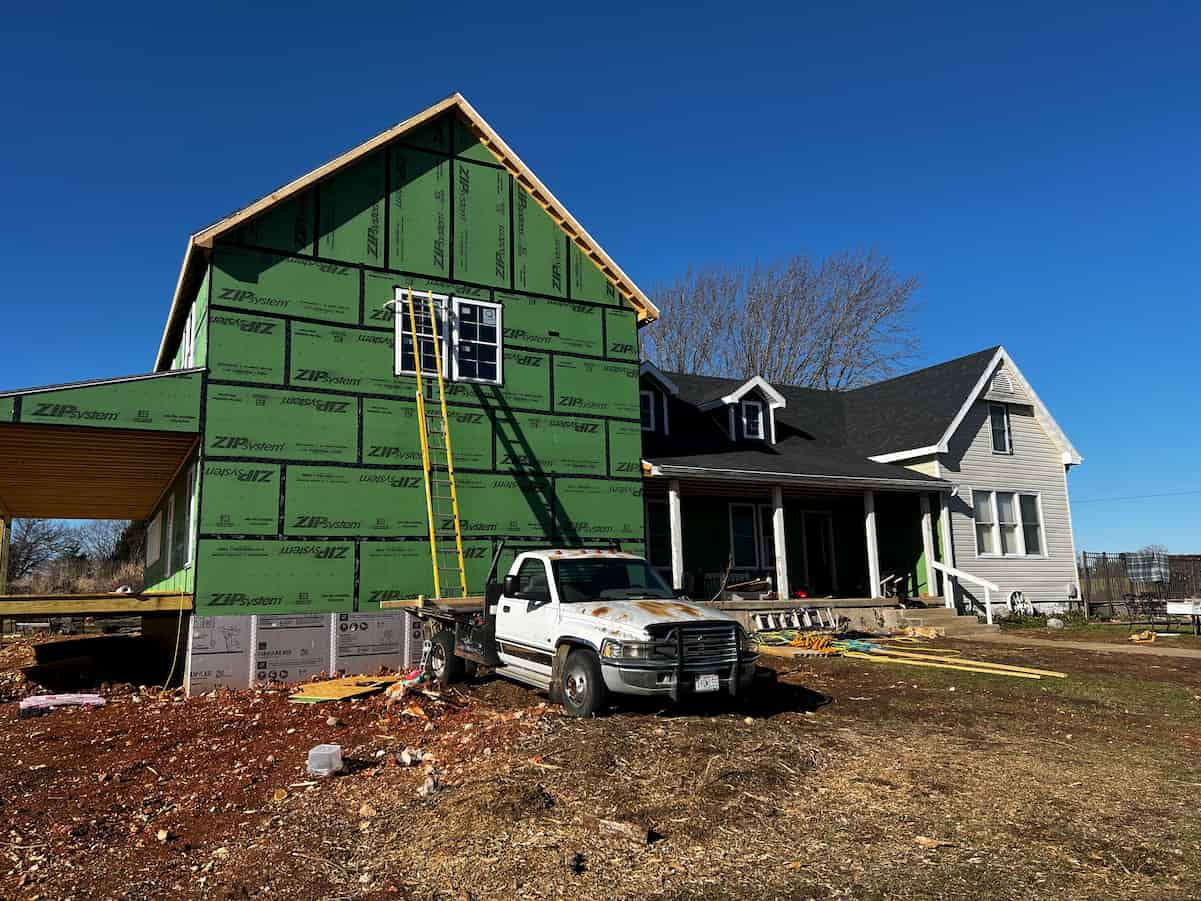
Our plans include an additional 1800 square feet. This will be a two-story addition. There will be a new kitchen and dining room on the lower level and then two bedrooms and a full bath on the upper level. We are also planning to dig a basement as our current home only has a tiny cellar that you have to use a ladder to climb into.
Most likely we will just have the contractor dry in the addition and we would do all the finishing work ourselves, including plumbing and electrical.
Our current kitchen will become additional mudroom space and a pantry. The pantry is what excites me the most. Therefore our first installment of dream posts is centered all around the pantry!
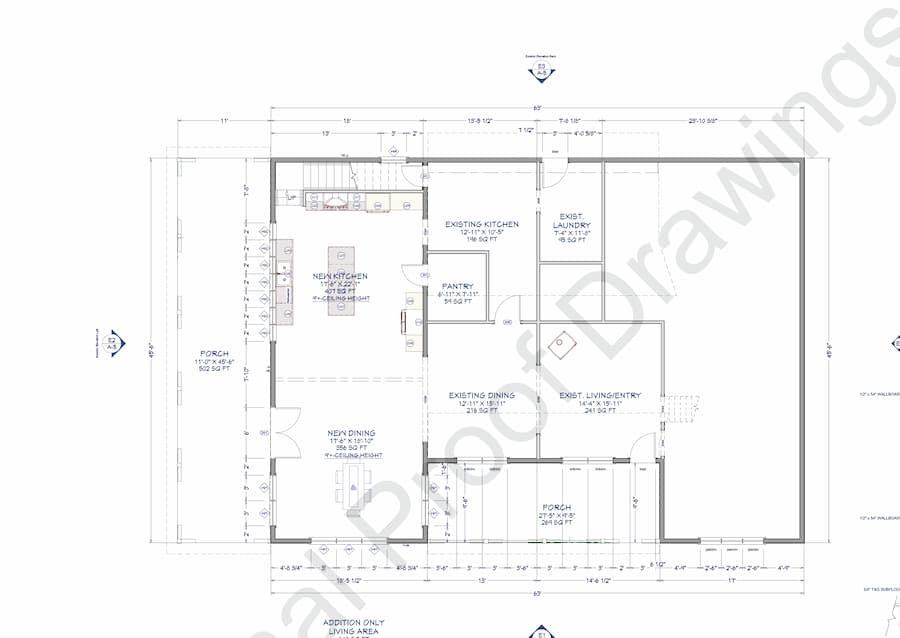
Pantry Dimensions
The pantry plans are only about 6’x 7′ on the above drawing. After thinking about that, I really think I would like to sacrifice mudroom space for more pantry. We’ll see what we decide, but I think my husband is on board with that idea as well.
The above is just a screenshot so it’s not the easiest to see, sorry about that!
Scullery Design
What is a kitchen scullery? The word makes you think of Downton Abbey right? Well, a scullery was a smallish kitchen usually off the back of the house where all the dirty work was done. This space was out of sight of the main house and is where the dirty dishes were washed and clean dishes stored.
In modern luxury homes with an open floor plan, the scullery is making a comeback. People like the meal prep and dirty dishes to be out of sight so that the main kitchen can stay clean for serving food and drinks. While I’m not looking for a luxury home exactly, I would really like to lay this out to serve our family’s needs and I see the wisdom in having that separate area.
What I would like is for my pantry to be a bit of a scullery. Mainly meaning I would like a sink in it. I love to make soap and having a place to do that away from the main kitchen would be ideal. If I could also get a scullery maid to go with it, that wouldn’t be so bad and if Mrs. Patmore came to whip up a few meals I sure wouldn’t complain! Ha!
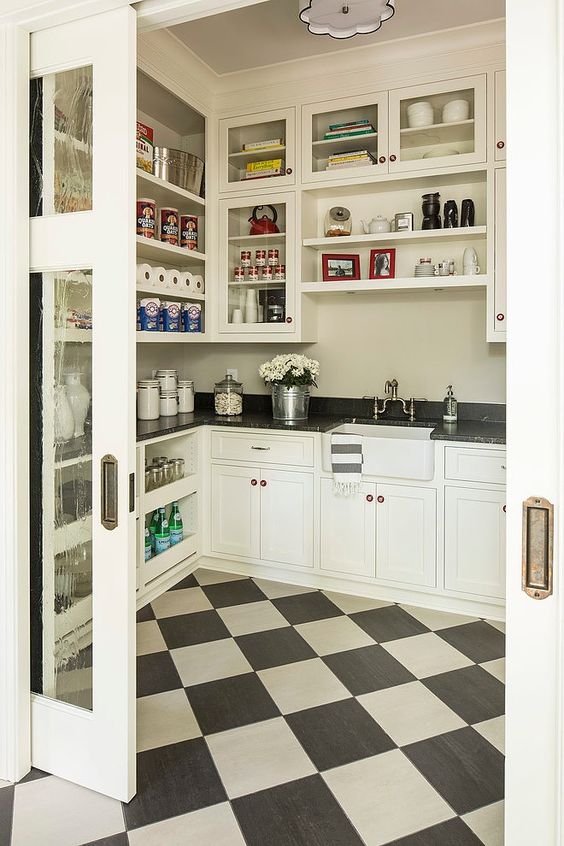
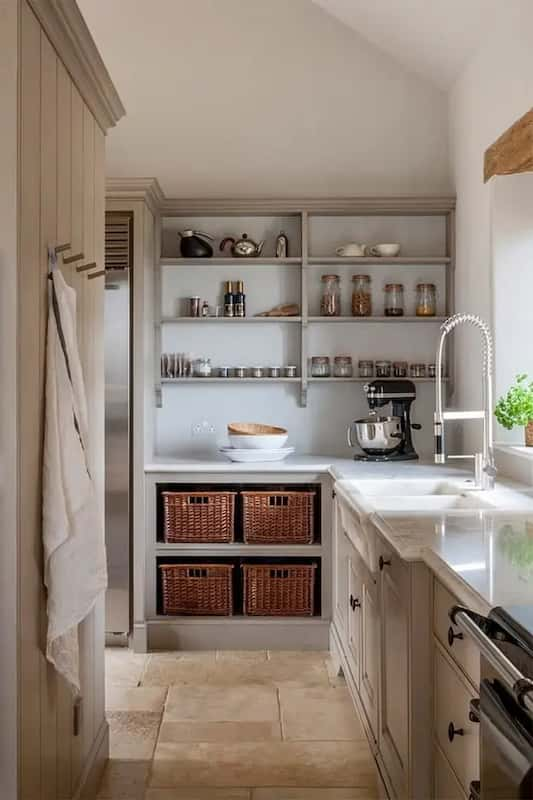
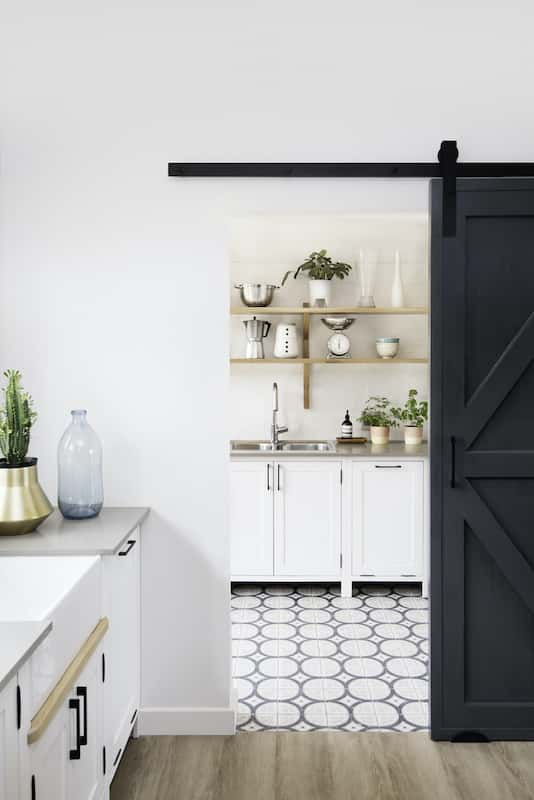
A butler’s pantry is also a similar idea and I’ve always loved those as well. Below are a few pictures of some of my favorite pantries that I’ve found around the web with credit given:
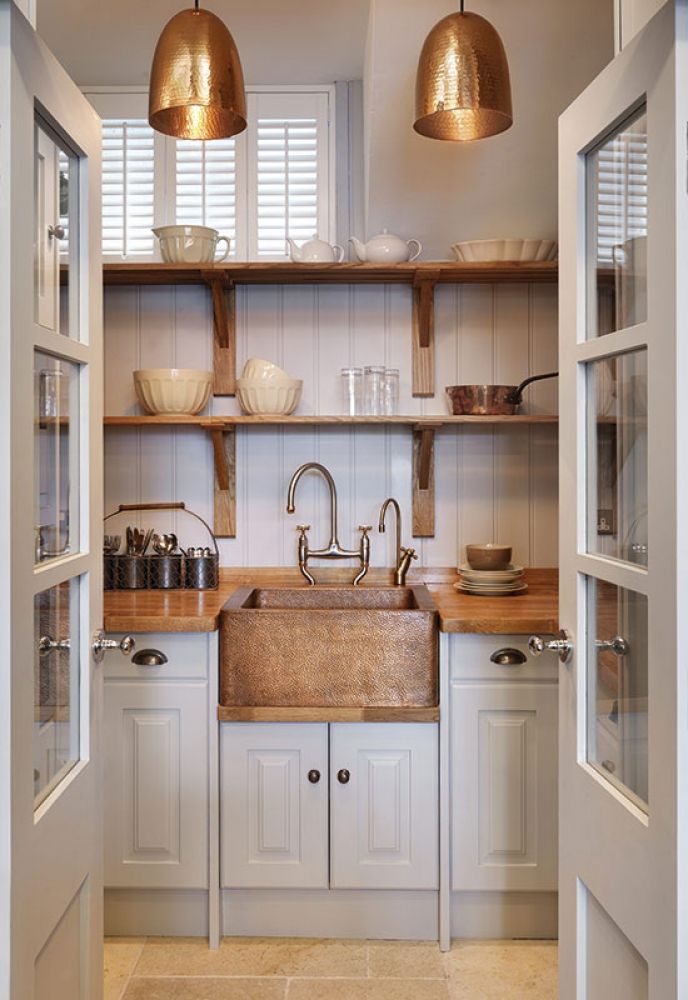
Walk-in Pantry Organization
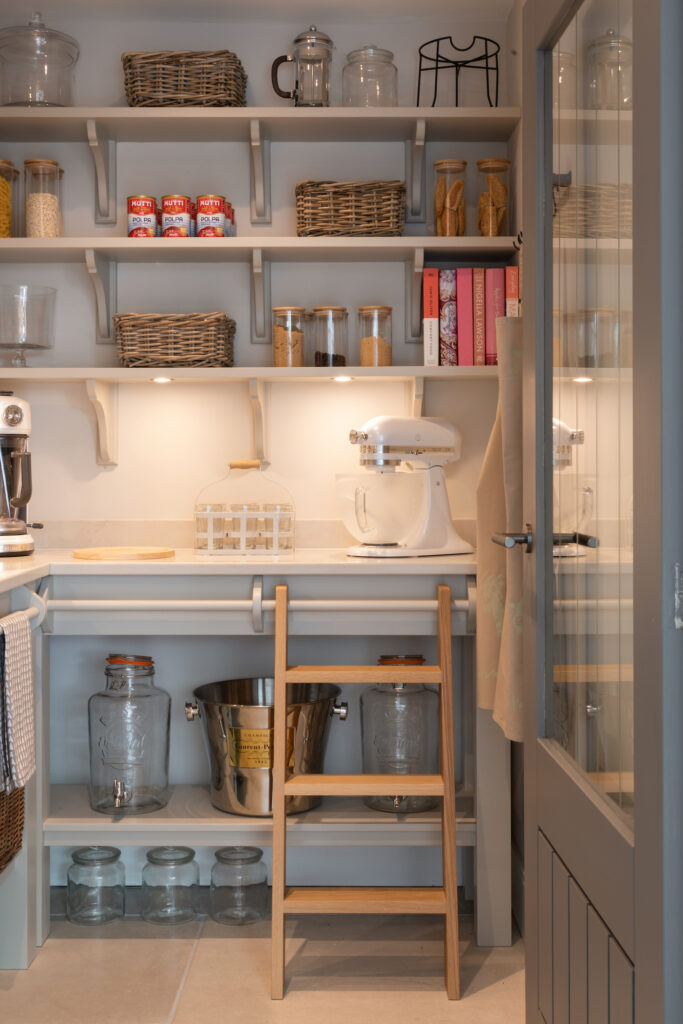
I love clear glass jars for keeping flour, oats, and sugar on my counter. You can easily see if you are running low and I think it just looks so pretty! These jars will definitely be part of our pantry organization!
I also love these can organizers! What a smart way to store canned goods!
Here are some other great farmhouse pantry organization tools!
- Turn your pantry door into more storage
- Huge fan of baskets with labels!
- This airtight set comes with labels too and here’s a great option
- I love the look of wicker or water hyacinth baskets but they are so pricey!

Pantry Shelving Options
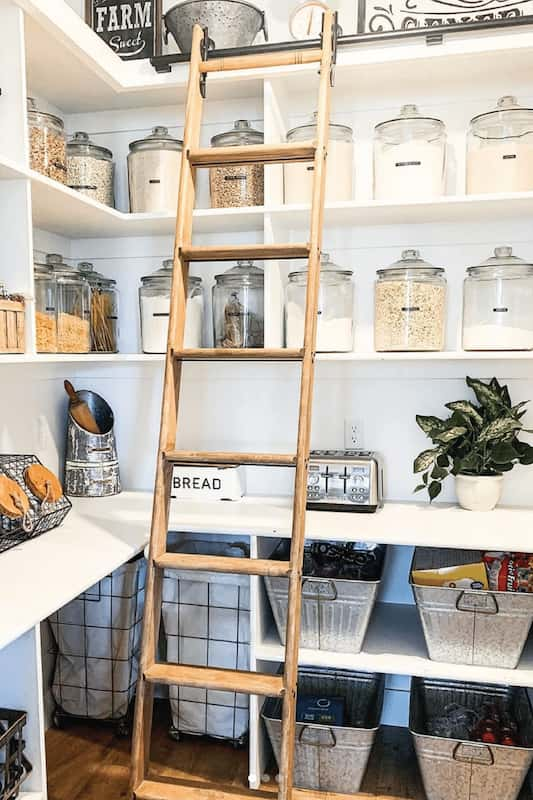
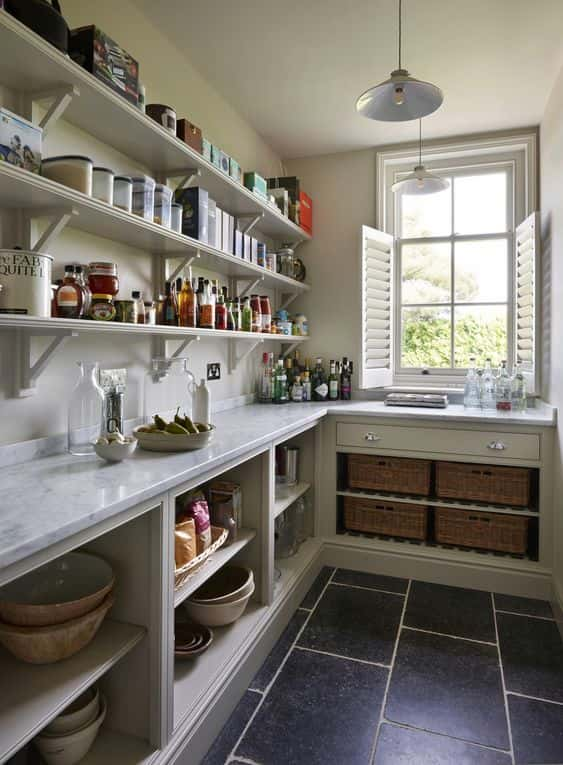
There are a wide variety of ideas out there for pantry storage options, from shelves to custom cabinets. We will likely go with open shelving. Our contractor said the price of custom cabinets right now is $600 a linear foot! Yikes! I like the idea of being able to find what I need at a glance anyway so open shelving will likely be the way we go!
I don’t care for the look of wire shelves so something wooden will likely be the way we go.
Farmhouse Pantry Flooring
Since the pantry is a smaller space away from the rest of the house, this might be your chance to try out a fun floor! Depending on the price, I might consider doing something a little different in our pantry as well. We have done a painted check floor in the past so that might be an option. I don’t love ceramic tile in a kitchen as if you drop something it is 100% guaranteed to break! Wood floors have a bit more bounce and are more forgiving if you drop a jar of beets!
However, the slate floors in the above picture look really good too! I’m sure they wouldn’t be as forgiving as wood though! Several of the pictures below have really pretty floors as well!
Farmhouse Pantry Doors
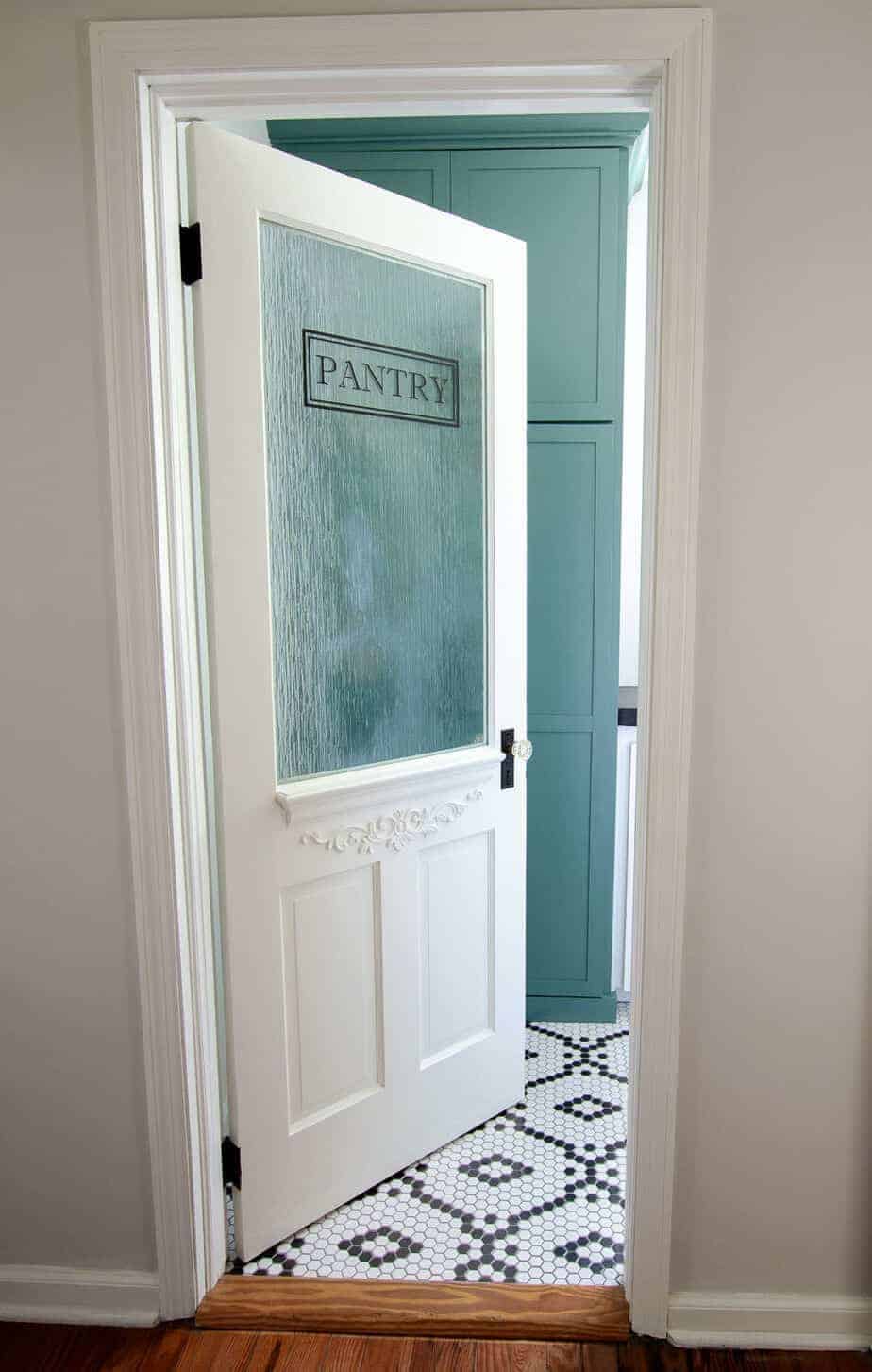
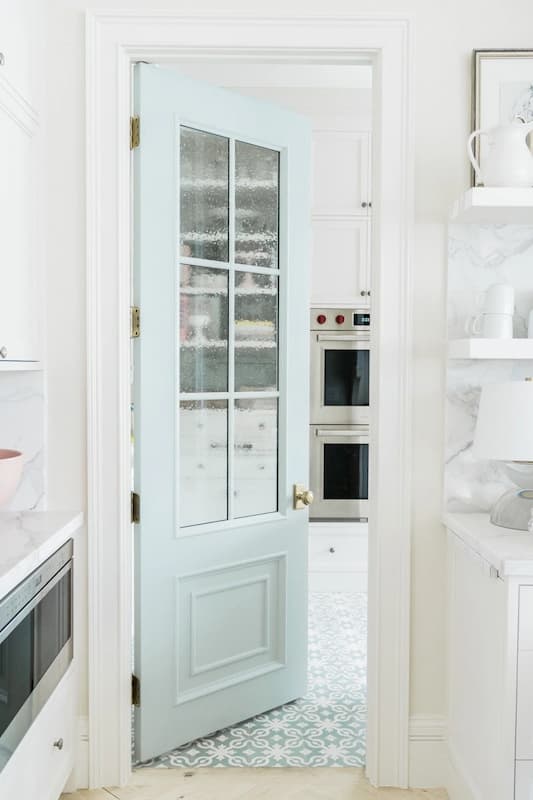
I love the idea of a window in the pantry door. It would allow light in and it just looks so old-fashioned and quaint. I like the doors that have storage space on the back side as well! Super smart idea if you are short on space!

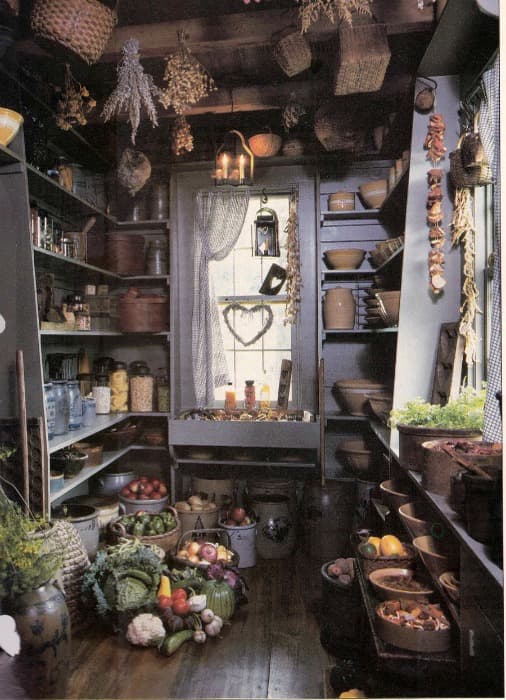
This picture below just looks so lovely to me. I love the primitive old-fashioned look of it! I don’t know if I would ever have a pantry quite like this one, but it really is beautiful!
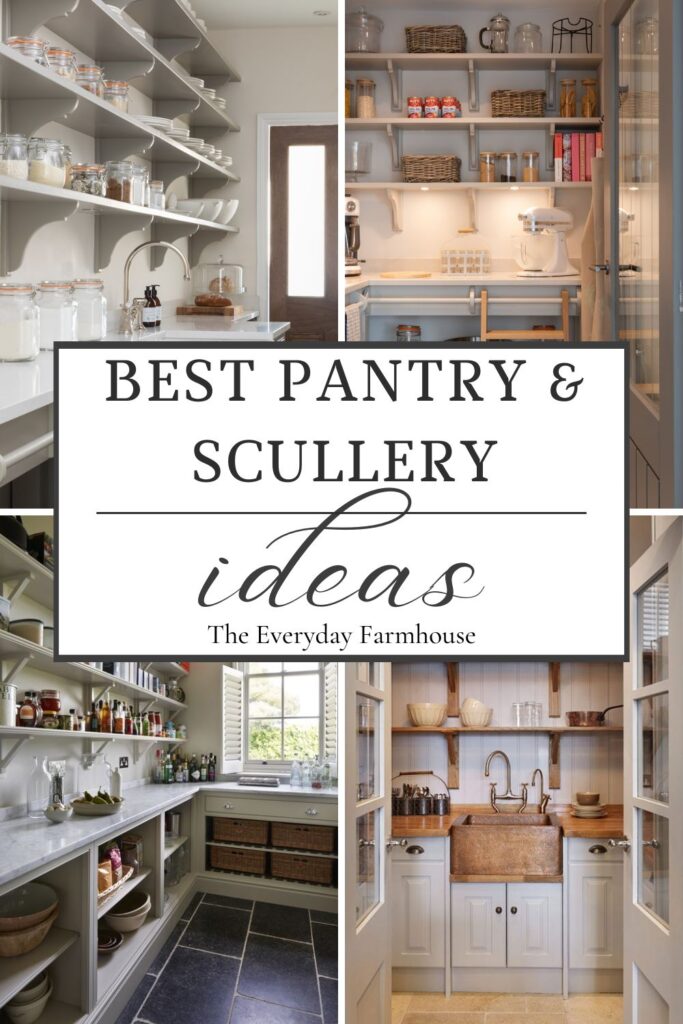
Pin for Later!
That’s it for now! If you are pantry dreaming too, feel free to save some of these images to you pinterest boards! It’s always good to be able to study and compare different ideas!

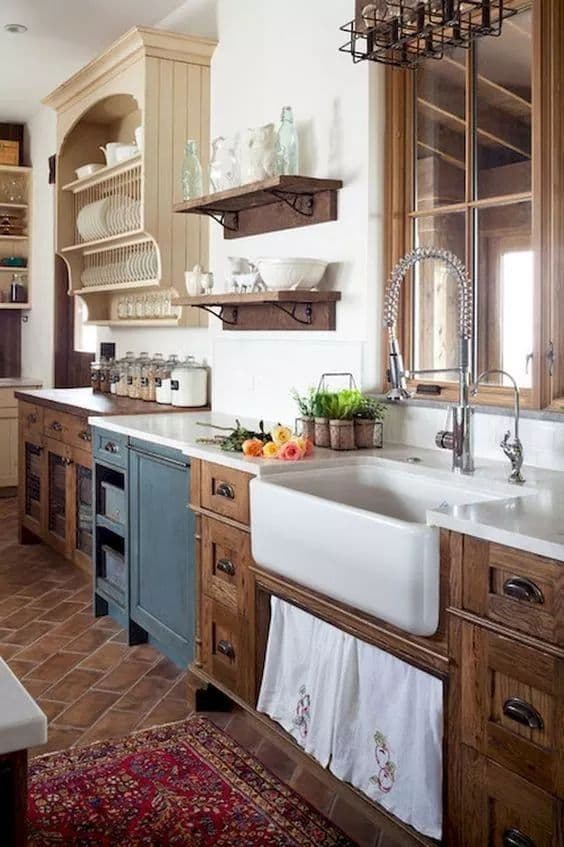
Love that last pantry so much! I could cook with supplies in a gorgeous pantry like that!
We have just purchased a smaller home, kids have moved and we are empty nesters. A beautiful house but it has a laundry “closet” and no real pantry. So, i am looking to combine a butlers pantry with a laundry room, using the existing formal dining room off the kitchen. You have some great ideas i hope to use!! Thank you and good luck to you!!
Thank you! Same to you I hope you are able to create a space that works well for you!
Each of these ideas are so inspiring for creating a beautiful pantry, so thanks for sharing!
Thank you for stopping by!
Nice article. I just learned about sculleries recently. I would avoid the black and white checkered floor, though. It is symbolic of The Masons and their Satanic leanings. If you learn about what they have to do to get to the 33rd degree, you would never see those floors the same way. So much even has been kept hidden in plain sight. Good thing more people are rapidly waking up though. I have noticed some of the pictures of old-fashioned sculleries have those Masonic black and white floors. Another interesting piece of history: those floors were often in ice cream shops where children go. There was a reason for that—and not a benign one. I hate seeing those floors now. Very disturbing when you know the Masonic history.
Yes, I think we are all waking up to the truth of those organizations and how much they have infiltrated our society. I wasn’t aware of the floors, on a lighter note, when we were newlyweds we used peel and stick tile for our kitchen in that black and white pattern. It was absolutely horrible to keep clean, the combination showed every single speck of dirt.
I don’t think you need to worry yourself about Masons and the secret meaning in checkerboard floors. That arrangement of squares and alternating colors predate the Masons by 5,000 years. See: Origins in Mesopotamia & the Ancient Near East: The First Geometric Stone Floors
Over 5,000 years ago, Sumerian and Babylonian builders developed early checkerboard-like pavements in palaces, ziggurats, and temples.